

How Welsh Local Authority Rhondda Cynon Taf Migrated 111 Schools from SIMS to Bromcom in Just Three Months.
At BETT 2026, one of the most quietly impressive MIS case studies came from Rhondda Cynon Taf County Borough Council in South Wales. The local authority shared how it successfully migrated all 111 of its schools from SIMS to Bromcom between April and June 2025 — a programme covering around 40,000 learners and ending 34 years of reliance on a single MIS platform.
The presentation was delivered by:
- Greg Morris, Business Improvement Analyst
- Antonia Thomas, Education Performance & Systems Manager
- Catrin Edwards, Head of Education Service, Transformation, Data & Systems
Together, they outlined not just a system change, but a transformation in how data, processes and services now operate across the authority.
A large and diverse school estate
Rhondda Cynon Taf supports a wide range of provision:
- 88 primary schools
- 17 secondary and all-through schools
- 4 special schools
- 2 pupil referral units
Despite the diversity of need, all schools had been using SIMS for more than three decades, alongside a growing ecosystem of third-party applications layered on top.
The decision to move was not simply about replacing software. It was about simplifying systems, improving access to data and reducing the burden placed on schools.
Starting with what schools actually needed
The programme began with a detailed discovery phase. Schools were asked what they wanted from a new MIS and to catalogue the third-party systems they were using. This provided the authority with a clear view of both functional requirements and the true complexity of the existing landscape.
Suppliers were then invited to demonstrate their platforms, with support and insight from other local authorities and English MIS support organisations. Rhondda Cynon Taf ran user testing and evaluation environments so schools could see systems working in real-world scenarios. From this, the authority created a detailed specification and ran a formal procurement through the Kent County Supplies (KCS) framework, ultimately awarding the contract to Bromcom.
A fast, structured rollout
The scale of the migration was significant. The authority deployed Bromcom to 15 schools per week, with all 111 schools live by the end of June 2025. This included full deployment of My Child at School (MCAS) across the estate. Such a compressed timeline is rare for a project of this size, and it was achieved through strong central coordination, standardised configuration and close collaboration between the authority, Bromcom and schools.

What are schools seeing so far?
Although still early in the lifecycle, feedback from schools has been consistent:
- Fewer third-party systems
- Direct financial savings, estimated at:
- £ 1,000 to £ 2,000 per primary, Special & PRU schools per year
- £ 5,000 to £ 20,000 per secondary and all through schools per year
- Lower administrative burden from maintaining multiple platforms
- Better access to data and real-time dashboards
- Improved visibility of trends
- More flexible user-defined tools
- Automation of routine processes
- Single sign-on for easier system access
For many schools, the most immediate impact has been the reduction in duplicated work and fragmented data.
A step-change in how the authority works with schools
The benefits are not limited to individual schools. The local Authority has seen significant gains in how it manages referrals and support services.
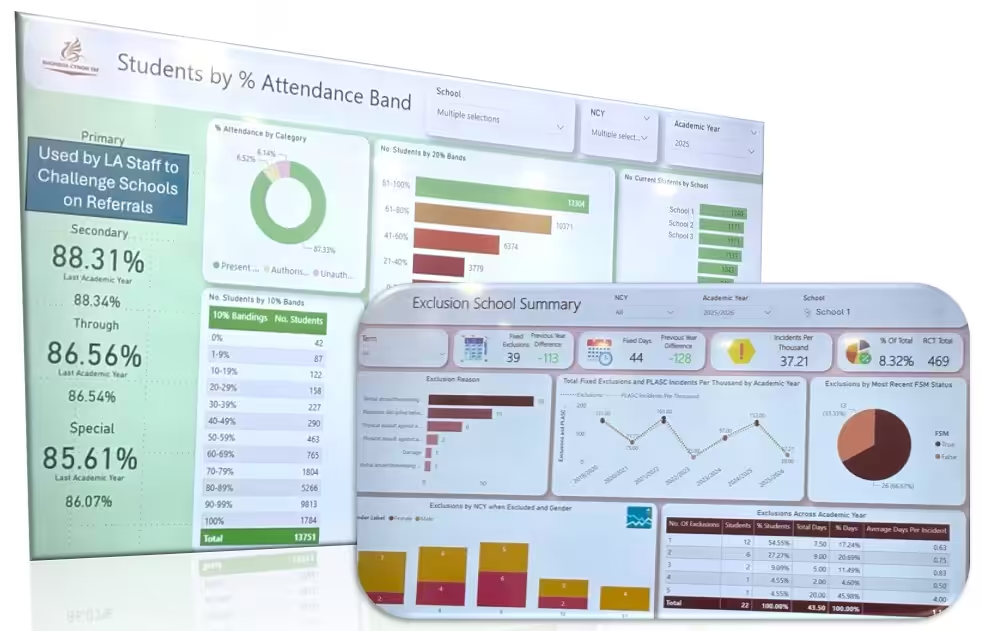
Under the old model, schools often had to re-enter the same data into separate forms when seeking LA support. Now, because Vision holds the required information in a consistent format, referrals can be made using existing data, saving time for both schools and central teams. This standardised process provides clearer, more reliable evidence to support timely interventions, while reducing duplication and frustration.
Central configuration at scale
One of the biggest advantages for the central education team has been the ability to manage configuration centrally across all schools, including:
- User-defined fields, panels and flags
- Lookups and quick reports
- Assessment templates
- LA staff accounts, roles and permissions
- Single sign-on for support teams
This ensures consistency across the estate, aligned data structures and shared reporting standards — all of which translate into major time savings for the MIS support team.
Data-driven insight
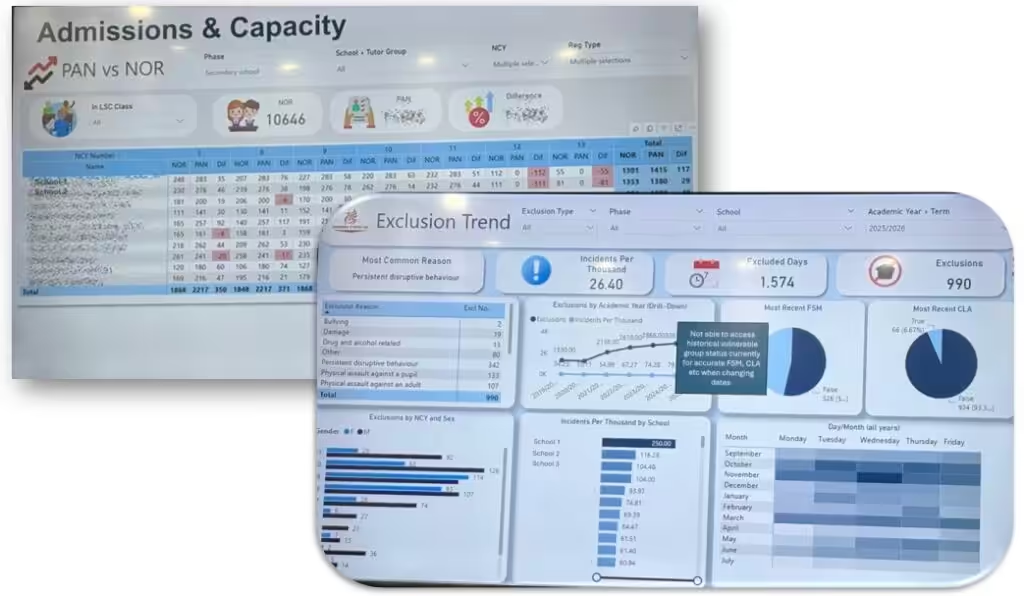
The authority is also building a much stronger analytical capability. While exploring the Vision platform, the authority is already using centralised data feeds to populate Power BI dashboards, giving leaders and teams access to real-time, cross-school insight. The result is a far more coherent picture of performance, trends and emerging issues across the authority
A model for large-scale MIS change
Migrating 111 schools in three months is not just a technical achievement — it reflects a shift in how local authorities can use modern MIS platforms to standardise processes, reduce cost and unlock better data.
For other authorities and MATs considering large-scale change, Rhondda Cynon Taf’s experience shows that with the right preparation, governance and partnership model, even the most complex MIS estates can be modernised at pace.