

In recent weeks, several schools have reported receiving renewal quotes from their incumbent MIS provider showing increases of between 176% and 240% compared with the previous year. While these figures vary depending on contract type, school size, and any historic discounts, the scale of the jump has understandably caused widespread concern across the sector.
Although this may represent the first significant price rise in three years, it has nonetheless come as a considerable shock to many schools. At the same time, there is growing speculation that other MIS providers are reviewing their pricing strategies, with some anticipated to introduce increases well above inflation as we move into the 2026 / 27 contract cycle.
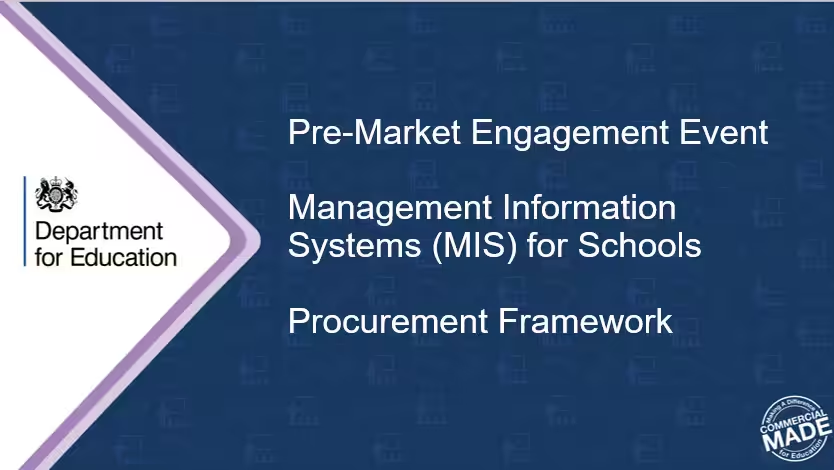
With the DfE considering creating an MIS framework, it’ll be interesting if they try to include controls on subscription pricing – see:
Whilst no vendors formally announce price changes, the pattern emerging from conversations with schools, MATs, and procurement leads indicates that a broader market-wide shift in MIS pricing may be on the horizon.
Why Might MIS Costs Be Rising?
Several factors appear to be driving this trend:
1. Increased Development and Hosting Costs
As MIS systems move further into cloud-based architectures, providers are investing heavily in infrastructure, security, data warehousing and integrations. Some vendors may be passing more of these costs onto schools.
2. Market Consolidation
With acquisitions, mergers and investment-led restructures across the sector, some companies are realigning pricing to reflect new commercial models. This can lead to prices being standardised—and sometimes significantly increased.
3. Dependency and Switching Costs
Some suppliers may be relying on the fact that schools perceive switching MIS as difficult, disruptive or time-consuming. This inertia can embolden providers to raise prices aggressively, assuming many schools will accept it.
4. New Feature Rollouts
A few MIS providers are adding AI-driven tools, dashboards and analytics that increase system value—but they may also be using these enhancements to justify higher price points.
How Should Schools and MATs Respond?
Regardless of which MIS you currently use, now is the time to be proactive:
1. Review Your Renewal Quotes Carefully
If a large increase has been proposed, ask for a full breakdown and justification. Schools often discover unused modules, legacy services or outdated pricing structures that can be renegotiated.
2. Don’t Wait Until Your Contract Expires
Give yourself at least 6–9 months to explore alternative MIS options. Even if you choose to stay with your current supplier, the leverage created by understanding the wider market can lead to better terms.
3. Consider Total Cost of Ownership
It’s not just the annual licence. Data migration, training, third-party system fees and staff time all contribute to the true lifetime cost. A low sticker price is not the same as long-term value.
4. Challenge Third-Party Charges
As reported separately by WhichMIS?, some third-party systems charge schools significant fees for switching MIS—£400–£600 in some cases. Schools should raise this with suppliers and ensure these charges are not being used to discourage switching.
5. MATs Should Leverage Scale
If you’re part of a MAT, coordinated procurement can secure preferential pricing and reduce migration costs across the trust.
Is this a temporary spike or the start of a trend?
At this stage, it’s unclear whether these price rises signal a one-off correction or a longer-term pattern. What is clear is that schools cannot assume stability in MIS pricing.
With substantial changes underway in the marketplace and a more competitive environment emerging, providers are positioning themselves for the next decade of MIS evolution. Some will raise prices. Others may hold or even reduce them to win market share.
WhichMIS? will continue to monitor these developments closely and will publish updates as more information becomes available.