

Following our ‘When Systems Fail’ post of 13th Oct, we now look at how schools should plan for the unlikely event of a service failure?
In today’s education sector, more and more of a school’s daily operations are dependent on cloud-based systems and digital services: the MIS, finance software, parental engagement, communication tools, safeguarding platforms, learning portals, etc, etc.
These systems are powerful and reliable, but no system is entirely immune from disruption. By being prepared for the unlikely event of a service failure, schools and trusts can keep running smoothly, maintain staff confidence, and minimise disruption for pupils and families.
At WhichMIS? we advise schools and multi-academy trusts (MATs) to take a proactive, structured approach to service continuity.
Below is a practical guide, aligned with DfE digital and technology standards, designed to apply irrespective of which MIS or digital service you use.
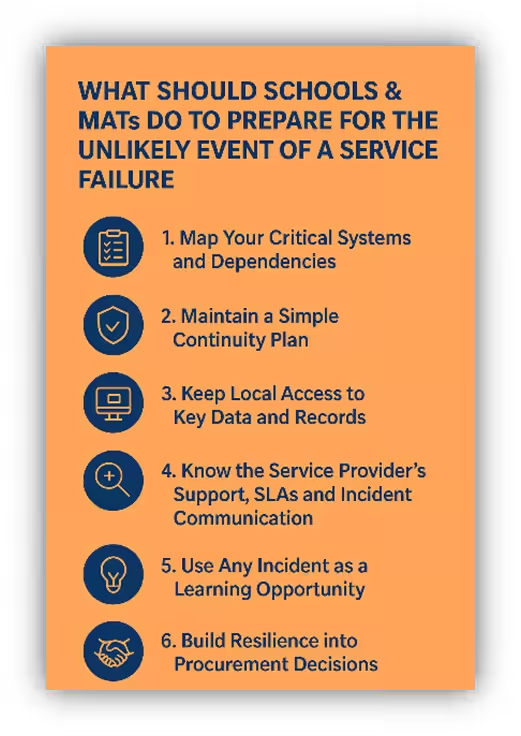
1. Map Your Critical Systems and Dependencies
Start by identifying the systems that are essential for your core operations: attendance, assessment, safeguarding logs, parent communications, timetabling, finance, and so on. Ask key questions:
- Which services are cloud-based and externally hosted, and which are more locally managed?
- What happens if one or more services go down. Can you continue key functions manually or with an alternative?
- How long could you continue without full access before things become unsustainable?
Understanding and documenting your dependencies gives you a clear picture of where you are most vulnerable, and what to prioritise in an incident.
2. Maintain a Simple Continuity Plan
Even a short outage can cause confusion unless staff know what to do. Develop a concise continuity plan (a one- or two-page document is perfectly acceptable). It should include:
- Who to contact: your service provider(s), your internal IT/operations lead, your leadership team, and your board/trust escalation contact.
- Fallback procedures: e.g., how to take attendance if MIS is unavailable; how to access key pupil contact lists or safeguarding information if your system is offline; manual registers or offline spreadsheets.
- Communication protocols: how you will inform staff, governors/trustees and parents of an issue; how often updates will be given; where status information will be posted (e.g., website, school social media, email).
Having a clear, known checklist avoids panic and ensures everyone knows their role when service availability is interrupted.
3. Keep Local Access to Key Data and Records
Even if your MIS or other critical system is cloud-hosted, ensure you have up-to-date exports or backups of key information, such as:
- Pupil, parent and staff contact details
- Timetables and classroom allocations
- Attendance and pastoral logs
- Safeguarding/child-protection records (in a suitably secure format)
- Finance system summary reports (if applicable)
The DfE’s “Meeting digital and technology standards in schools and colleges” guidance includes a requirement to “develop and implement a plan to backup your data and review this every year”. https://www.gov.uk/guidance/meeting-digital-and-technology-standards-in-schools-and-colleges
Scheduling regular exports (e.g., weekly or daily) to a secure, offline or non-dependent location is a simple step that pays off when the unexpected happens.
4. Know the Service Provider’s Support, SLAs and Incident Communication
When you sign up with an MIS or cloud provider (or are renewing a contract), ensure you understand:
- The Service Level Agreement (SLA): what uptime commitments are in place, what constitutes an incident, what compensation or remediation is available.
- How the provider communicates during outages: Do they publish a status page? Send out alerts? Provide an incident timeline and root-cause analysis?
- Who in your school or trust monitors that communication? Ensure a named person subscribes to the provider’s alerts and can escalate if necessary.
Part of the DfE standard is that schools include digital technology within their disaster recovery and business continuity plans.
Being clear on your provider’s expectations means you can hold them to account and have confidence in how they will behave when things go wrong.
5. Use Any Incident as a Learning Opportunity
When a service failure does occur (even if minor), treat it as a rehearsal for your resilience processes. After an incident:
- Review what happened: how long, which functions were impacted, what backup/fallback procedures were triggered.
- Ask: Did staff know what to do? Was the communication clear? Were key data and contact lists accessible?
- Update your continuity plan accordingly: refine procedures, clarify roles, improve exports/backups, ensure contact lists are up to date.
Continuous improvement is easier when you reflect on real-world events rather than waiting for a major failure.
6. Build Resilience into Procurement Decisions
When choosing or renewing a system (MIS or other cloud tool), don’t focus solely on functionality and cost—resilience and reliability matter equally. Ask potential providers:
- What redundancy, backup and recovery systems do you have?
- How do you communicate with customers during service incidents?
- Do you publish service status and incident history?
- How often do you test your disaster recovery procedures?
These questions help you evaluate whether the supplier takes reliability seriously. This is likely to influence your long-term cost of ownership and service continuity more than initial purchase cost.
7. Balance Risk with Realistic Readiness
It’s important to remember that modern MIS and cloud-systems are extremely reliable: many report uptime of “99.9% or higher” (which typically equates to less than 9 hours of unplanned downtime per year). However, as the DfE standards remind us, resilience means being ready—not expecting failure.
In other words: don’t run your school assuming the system will go down—but ensure that if it does, you’re ready to continue key operations with minimal disruption.
In Summary
Service failures may be uncommon—but they are a reality. The difference between a minor hiccup and a major disruption often comes down to planning, clarity of roles, accessibility of key data and effective communication. Schools and trusts that:
Map their critical systems and dependencies,
Maintain accessible fallback data and procedures,
Understand their provider’s responsibilities and communication,
Review incidents and update plans, and
Include resilience in procurement decisions
will be far better placed to respond calmly, confidently and effectively.
WhichMIS? encourages all schools and MATs to adopt this proactive mindset. Because digital resilience is not about predicting the future—it’s about being ready for it.
We asked all MIS providers ‘What Advice Would You Give to Schools to Prepare for the Unlikely Event of a Service Failure?’
Only IRIS Education responded with:

It’s important for school leaders to have a robust business continuity plan in place to prepare for the unlikely event of a complete service outage.
This might include ensuring the school has adequate supplies to support manual data entry, such as printable attendance sheets and distributing physical copies of timetables across staff and students, and quickly establishing protocols for logging and addressing safeguarding concerns.
Additionally, leaders need to communicate contingency protocols quickly across teachers, support staff, and back-office teams so everyone knows their role in implementing temporary measures.
Communication with parents is also key – an alternative parent communication method must be established to reach families should MIS-linked alerts fail in the first instance.
This means maintaining an up-to-date back-up of parent and guardian contact information and having manual email groups ready to deploy.