
While much of the school MIS market focuses on dashboards, AI, analytics and parental engagement, one of the most operationally critical parts of school technology infrastructure remains surprisingly overlooked: timetabling.
In recent posts on EduGeek about Nova-T XML files highlighted an issue that many schools, MATs and MIS teams continue to experience quietly behind the scenes, the complexity of moving timetable data between systems.
At first glance, XML exports and timetable imports may sound like a highly technical niche issue. In reality, they expose a much broader challenge across the education technology sector:
Interoperability between school systems remains inconsistent, fragile and heavily dependent on specialist knowledge and nowhere is this more visible than in timetabling.See our previous post on interoperability at https://www.whichmis.com/mis-providers-and-system-interoperability/
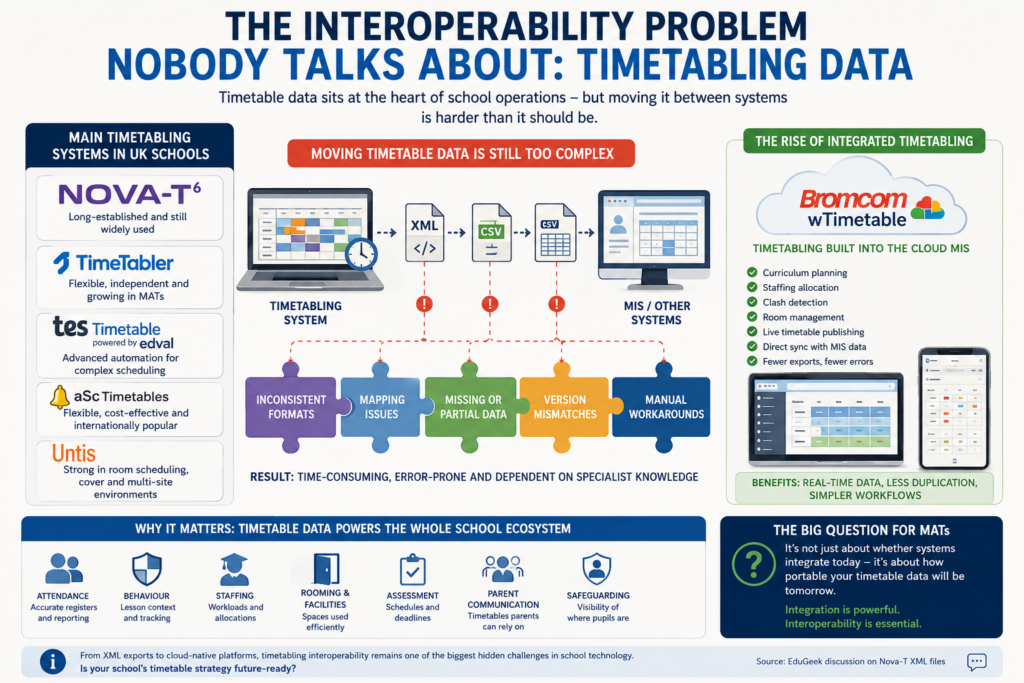
Timetable data underpins almost every operational process within a secondary school, including:
- class structures
- teacher allocations
- rooming
- attendance
- behaviour systems
- safeguarding visibility
- cover management
- parent communication
- assessment and reporting
When timetable data is inaccurate or poorly integrated, schools feel the impact immediately.
Despite this, timetable interoperability rarely features prominently in procurement discussions. Instead, schools often discover the complexity only during:
- MIS migrations
- MAT consolidation projects
- timetable rebuilds
- cloud transitions
- supplier changes
The result can be significant operational pressure on IT teams, MIS managers and timetablers.
The legacy of XML and proprietary formats
The EduGeek discussion centred around Nova-T XML files — a reminder that many schools still rely on export/import workflows developed years ago.
XML itself is not the problem. It remains a perfectly valid and widely used data exchange format.
The challenge is that many school systems rely on:
- supplier-specific structures
- undocumented mappings
- proprietary timetable logic
- inconsistent field definitions
- partial exports/imports
This creates a hidden layer of technical dependency inside schools.
In practice, schools often encounter issues such as:
- timetable imports failing validation
- rooming structures not mapping correctly
- staff codes differing between systems
- duplicate curriculum entries
- historical timetable data becoming inaccessible
- manual spreadsheet manipulation before import
In many schools, these problems are solved quietly by experienced staff behind the scenes.
The main timetable platforms in UK schools
The UK secondary timetable market is still dominated by a relatively small number of specialist systems.

ESS Nova-T6
Historically the most widely recognised timetabling platform in UK schools, particularly those using SIMS.
Nova-T remains deeply embedded across the sector and is still referenced heavily in migration and interoperability discussions.

One of the strongest alternatives, particularly popular in schools seeking flexibility and MAT support.
TimeTabler has increasingly positioned itself as a migration option for schools reviewing legacy systems.

A growing presence in larger and more complex secondary environments.
Edval is particularly known for sophisticated automation and scheduling optimisation.
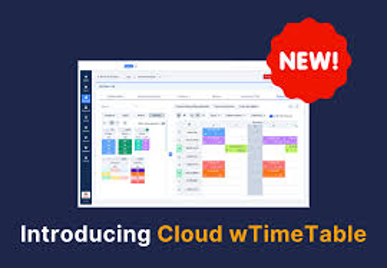
Bromcom W timetable
Increasingly, cloud MIS providers are integrating timetable construction directly into the MIS itself.
One of the most notable examples is Bromcom wTimetable.
Unlike traditional standalone timetable systems, Bromcom positions timetabling as part of its wider cloud MIS ecosystem, with features including:
- integrated curriculum planning
- staffing allocation
- live timetable publishing
- clash detection
- room management
- direct synchronisation into the MIS database
This reflects a broader trend across the sector:
moving from “connected systems” towards “single platform ecosystems”.
Historically, schools asked: “Can my timetable system integrate with my MIS?”
Increasingly, MATs are now asking: “How portable is my timetable data if we ever move again?”